Viso

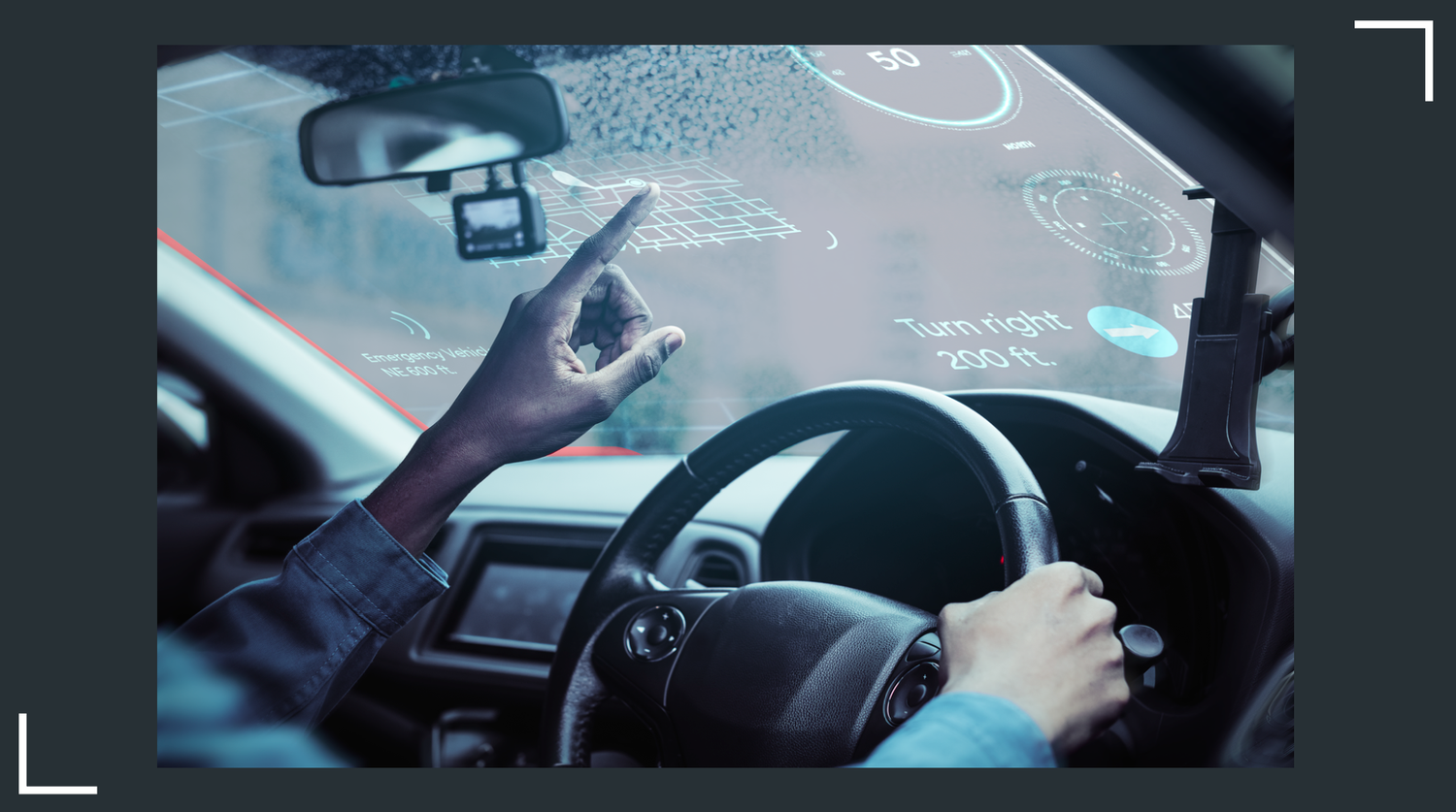
Viso is the world's first interactive windshield technology focused on empowering deaf and hard-of-hearing drivers through intuitive, real-time visual alerts. With the belief that awareness shouldn't depend on hearing, Viso transforms ambient audio cues such as sirens, honks, and emergency sounds into directional, glanceable visual signals that seamlessly integrate into a driver’s line of sight. Viso reimagines driving for the deaf. It's a tool for confidence, and for the independent.
Project Brief
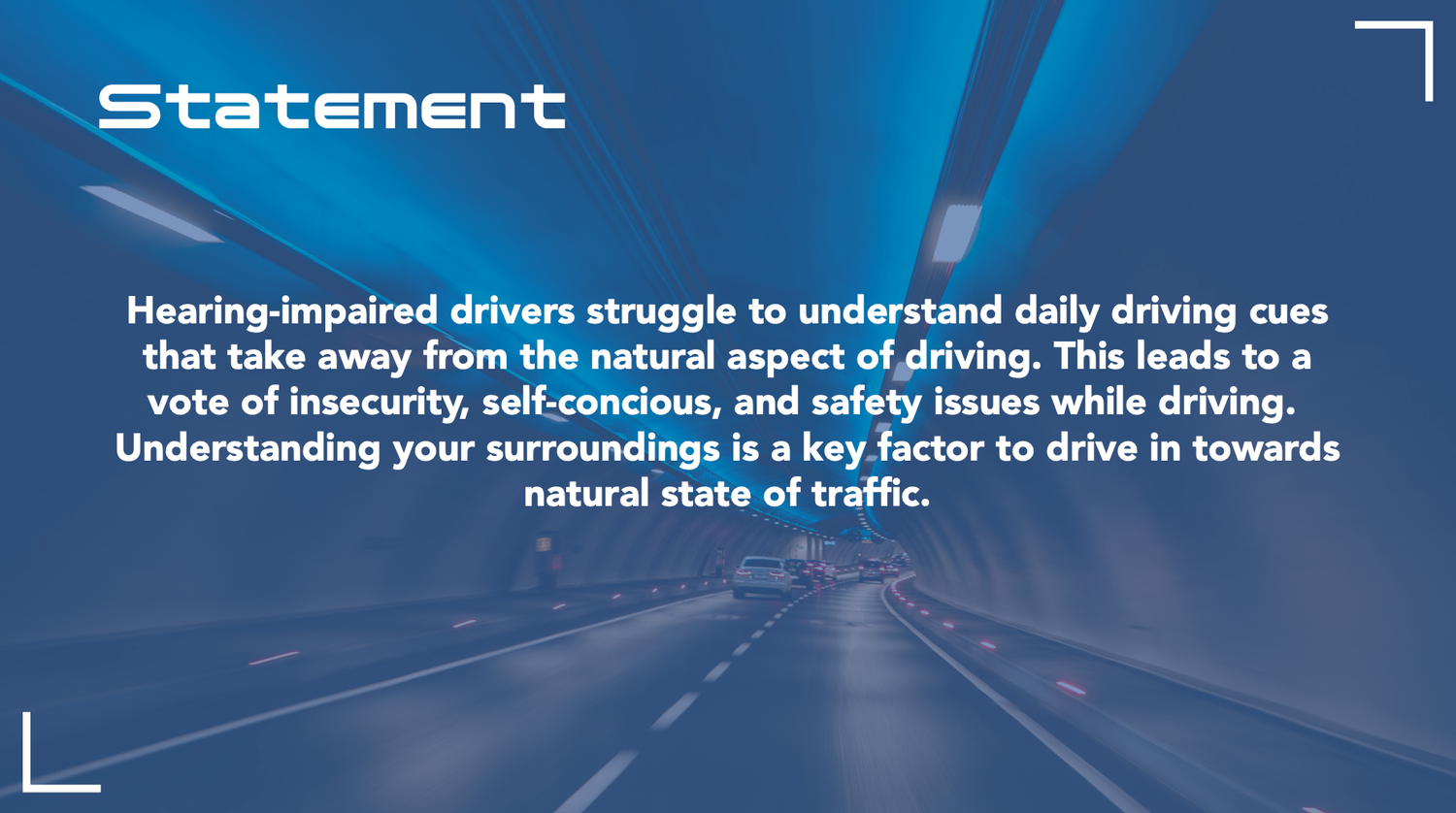
Driving relies on hearing but not everyone can hear.
From sirens and horns to engine knocks and screeching tires, sound plays a critical role in how drivers receive real-time feedback and stay safe on the road. It can make driving an overwhelming auditory experience. These audio cues often provide the first, and sometimes only, indication of danger. But what happens when a driver can’t hear them?
For the 430 million people globally living with disabling hearing loss, the road is a disadvantage for many. Deaf and hard-of-hearing drivers are expected to navigate an environment built around sound without the benefit of hearing. As a result, they must rely entirely on visual attention. While studies show that deaf drivers are just as capable as hearing drivers, their access to environmental awareness is limited by a lack of inclusive design. The current vehicle landscape doesn't offer equitable access to provide to these drivers, leaving them without the crucial context they need in fast-moving or emergency situations. Addressing this problem isn’t just about accessibility, it’s about fairness, dignity, and confidence behind the wheel.
Research
Awareness
Deaf drivers often develop heightened visual processing abilities, allowing them to monitor their environment effectively.
Disadvantage
Despite their adaptations, deaf drivers face challenges due to the auditory nature of certain driving cues, such as sirens from emergency vehicles and honking horns.
Danger
The absence of auditory information can lead to difficulties in quickly identifying and responding to these critical signals, potentially compromising safety.
Competitive Analysis
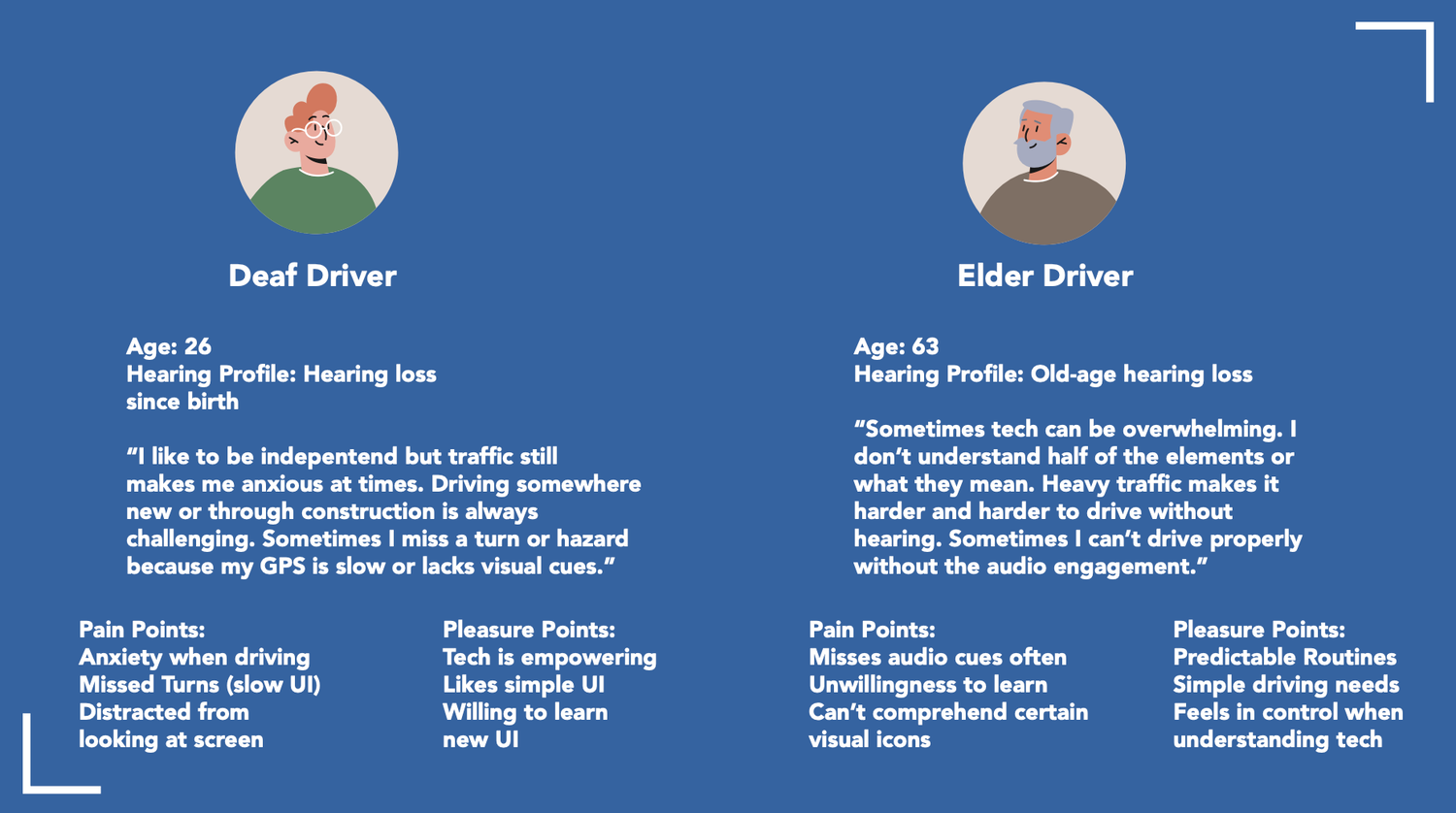
User Needs
Navigation Voices
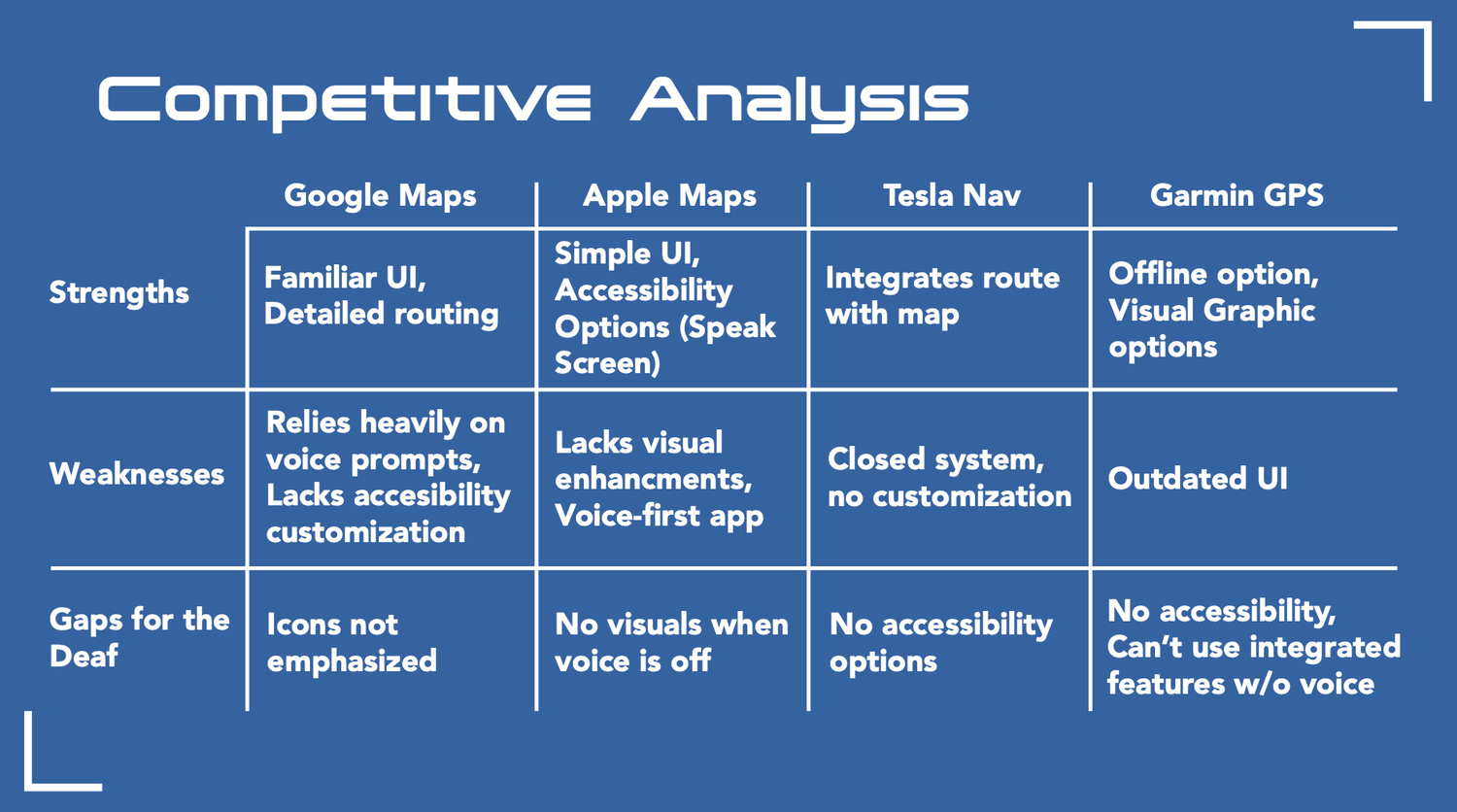
Most in-car navigation systems rely heavily on voice-based prompts (e.g., "In 500 feet, turn right").
Modern Infrastructure
Complex intersections or rerouting situations can be
overwhelming without auditory support.
User Preference
Studies from National Association of the Deaf show that deaf users prefer advance warning (not turn-right-now) and icon-based systems over text-heavy ones.
Project Proposal
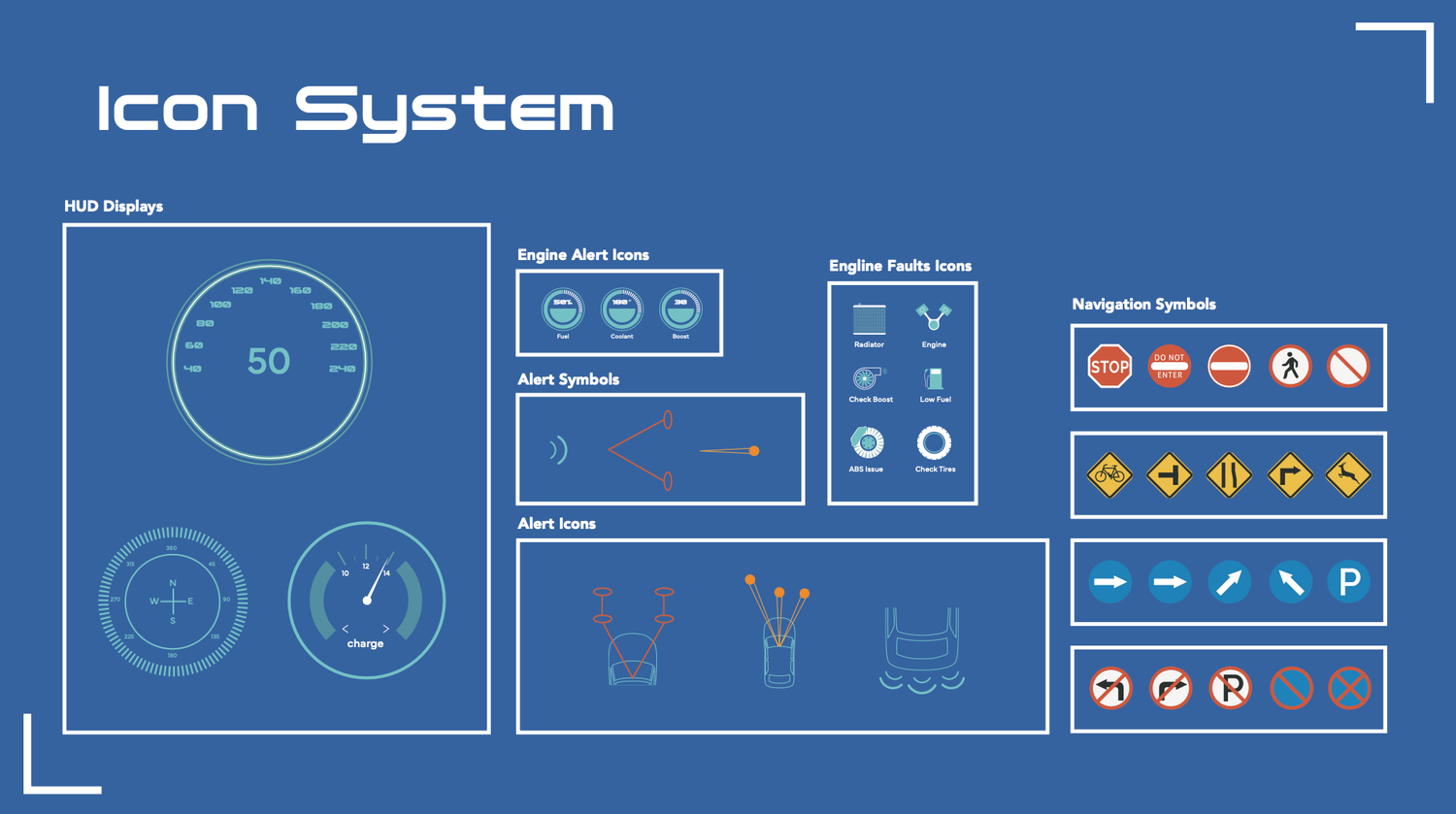
Viso is an interactive windshield system that visually translates ambient or critical sound alerts (sirens, honks, etc.) into visual/haptic signals. This design package, often an manufacture add-on, leverages real-time sound recognition and directional analysis to identify the source, type, and urgency of ambient alerts. Once detected, the system communicates this information non-verbally through on-glass visual overlays such as flashing icons, color-coded zones, or directional arrows integrated seamlessly into the driver’s field of vision. For additional awareness, vibration cues can be sent through the steering wheel or seat to supplement the visual system. By reimagining the windshield as an assistive interface, Viso ensures that deaf and hard-of-hearing drivers are empowered with the same level of environmental awareness as those who hear normally without distraction or cognitive overload. This project explores how multimodal feedback systems can bridge sensory gaps, reduce anxiety, and increase autonomy for underrepresented driver populations. Viso is an effort to bring accessibility to the forefront of automotive UX, where safety is not a privilege, but a shared standard.
Final Deliverables